You’ll get more accurate, reproducible separations when you tightly control temperature because fluid viscosity and density stay predictable ultracentrifuge, convection currents are suppressed, and rotor geometry remains stable under load. That means sedimentation coefficients and layer resolution won’t drift between runs, and phase or aggregation changes in your samples are minimized. Preconditioning and active feedback reduce transient gradients, while probe-based monitoring verifies setpoints. Keep going and you’ll see practical steps to implement and validate these controls.
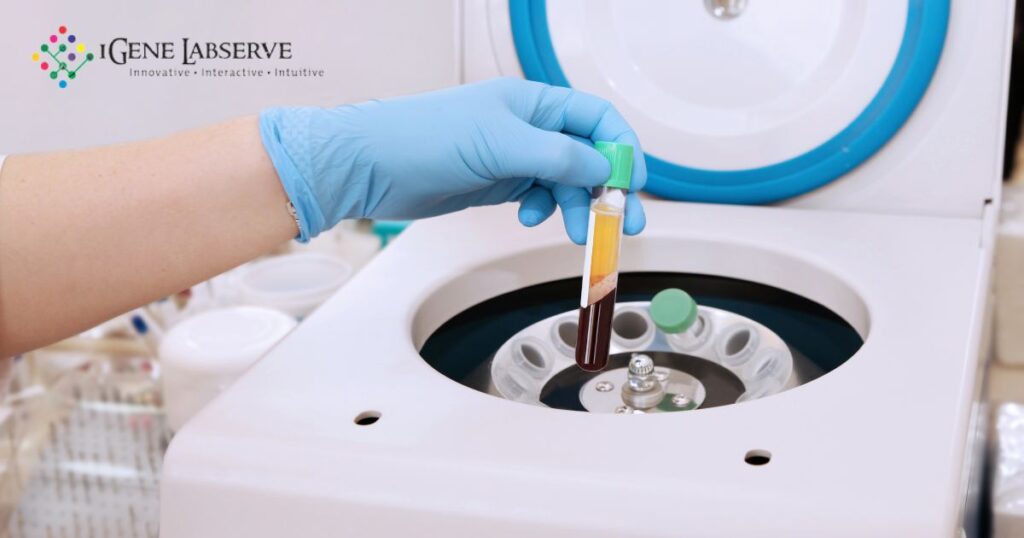
The Physics of Temperature Effects on Centrifugation
When you change temperature during centrifugation, you alter fluid density, viscosity, and rotor material dimensions in ways that directly affect sedimentation rates and balance. You’ll need to account for thermal convection that can set up circulatory flows orthogonal to radial sedimentation, disrupting layer integrity. Small temperature differentials create density gradients that modify buoyant forces and effective sedimentation coefficients, so you’ll control gradients tightly https://laballiance.com.my/. Rotor expansion changes g-field homogeneity; you’ll monitor tolerances and compensate rpm or run time. Instrument design should minimize thermal flux and provide rapid, uniform equilibration to preserve predictable sedimentation profiles. For innovation, you’ll integrate active feedback and predictive models to anticipate temperature-driven deviations and maintain precision in fractionation and pelleting.
Temperature-Induced Changes in Sample Properties
Although small temperature shifts may seem negligible, they can substantially alter a sample’s density, viscosity, and molecular conformation, and those changes will directly affect sedimentation behavior and particle interactions. You’ll notice solvent viscosity decreases with modest warming, accelerating sedimentation rates and changing separation resolution. Conversely, cooling raises viscosity and can trap particles in metastable distributions. Temperature can also drive phase transitions—protein unfolding, lipid phase changes, or solute crystallization—that dramatically alter effective buoyant mass and aggregation propensity. You must therefore monitor sample thermal history and design protocols that minimize unintended transitions. Control strategies include gradual ramps, validated equilibration times, and temperature mapping of representative samples. By anticipating thermally induced property shifts, you’ll improve reproducibility and enable higher-fidelity separations for innovative workflows.
Equipment Considerations: Refrigerated and Temperature-Controlled Rotors
Because rotor temperature directly determines sample viscosity, buoyant density, and phase stability, choosing the right refrigerated or temperature-controlled rotor is critical to reproducing sedimentation behavior and preventing thermal artifacts. You should evaluate rotor thermal uniformity, cooling power, and ramp response relative to your protocols. Prioritize designs with integrated sensors and active feedback so you can implement innovative methods without guessing internal gradients. Consider interchangeability, corrosion resistance, and balance tolerances that support advanced workflows. Establish scheduled refrigerated maintenance to preserve cooling efficiency and prevent drift. Integrate rotor calibration into equipment qualification so speed-to-temperature correlations remain valid across experiments. Select rotors that simplify data-driven optimization and pair with instruments offering precise setpoint control, because consistent hardware enables reproducible, forward-looking centrifugation development.
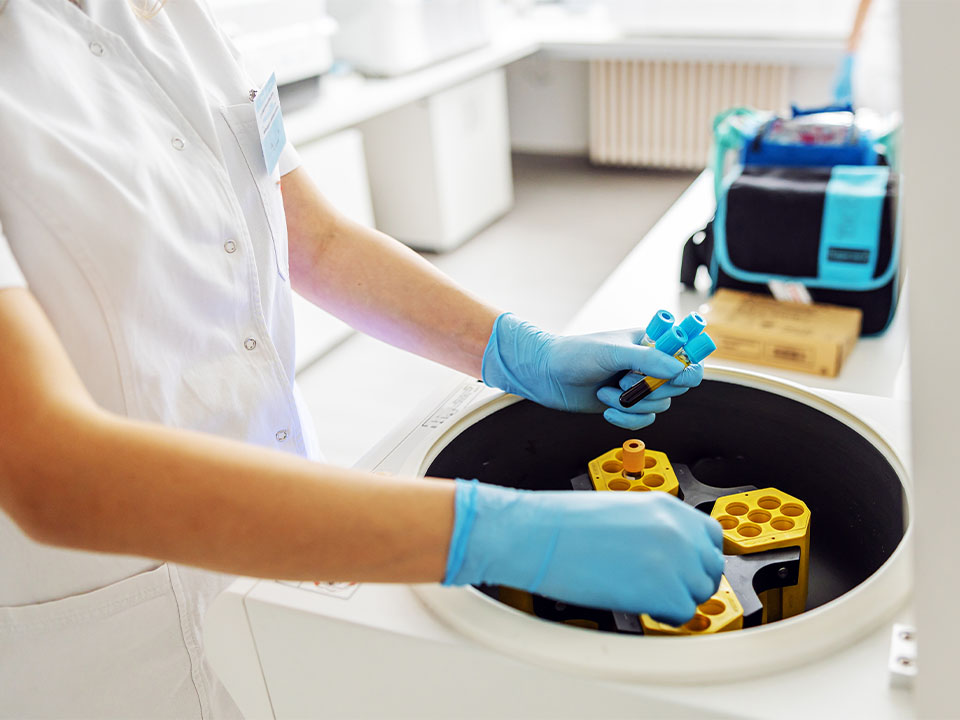
Best Practices for Maintaining Thermal Stability During Runs
Having selected a rotor with reliable thermal control, you should focus on operational steps that preserve setpoint integrity throughout each run. Precondition the rotor and samples to minimize ambient gradients before loading, and arrange sample balance to avoid asymmetric airflow. Use minimal chamber openings and a staged lid protocol to reduce abrupt thermal transients that drive thermal cycling. Program ramp rates and hold times conservatively to match sample thermal mass, and avoid unnecessary speed changes mid-run. Verify seals, coolant flow, and insulation regularly so active control isn’t fighting predictable losses. When designing protocols, prioritize repeatable thermal trajectories over speed gains to enable innovative assays that depend on stable temperatures. Document conditions so runs are reproducible and improvements are measurable.
Monitoring and Verifying Sample Temperature
Monitoring sample temperature requires both direct and indirect checks so you can be confident setpoints reflect the actual sample environment. You’ll deploy real time thermometry—miniature probes or fiber-optic sensors placed near representative tubes—to capture transient deviations during acceleration and deceleration. Complement probes with indirect checks: validate rotor and chamber temperatures reported by the centrifuge against probe data to detect gradients. Establish strict calibration protocols for probes and instrument sensors, schedule periodic verifications, and log results. Use automated alerts to flag excursions beyond tolerance and trigger intervention. When you analyze runs, correlate temperature logs with separation outcomes to refine targets. This methodical monitoring and verification loop reduces uncertainty, supports reproducibility, and enables incremental innovation in thermal control strategies.
0 Comments Leave a comment